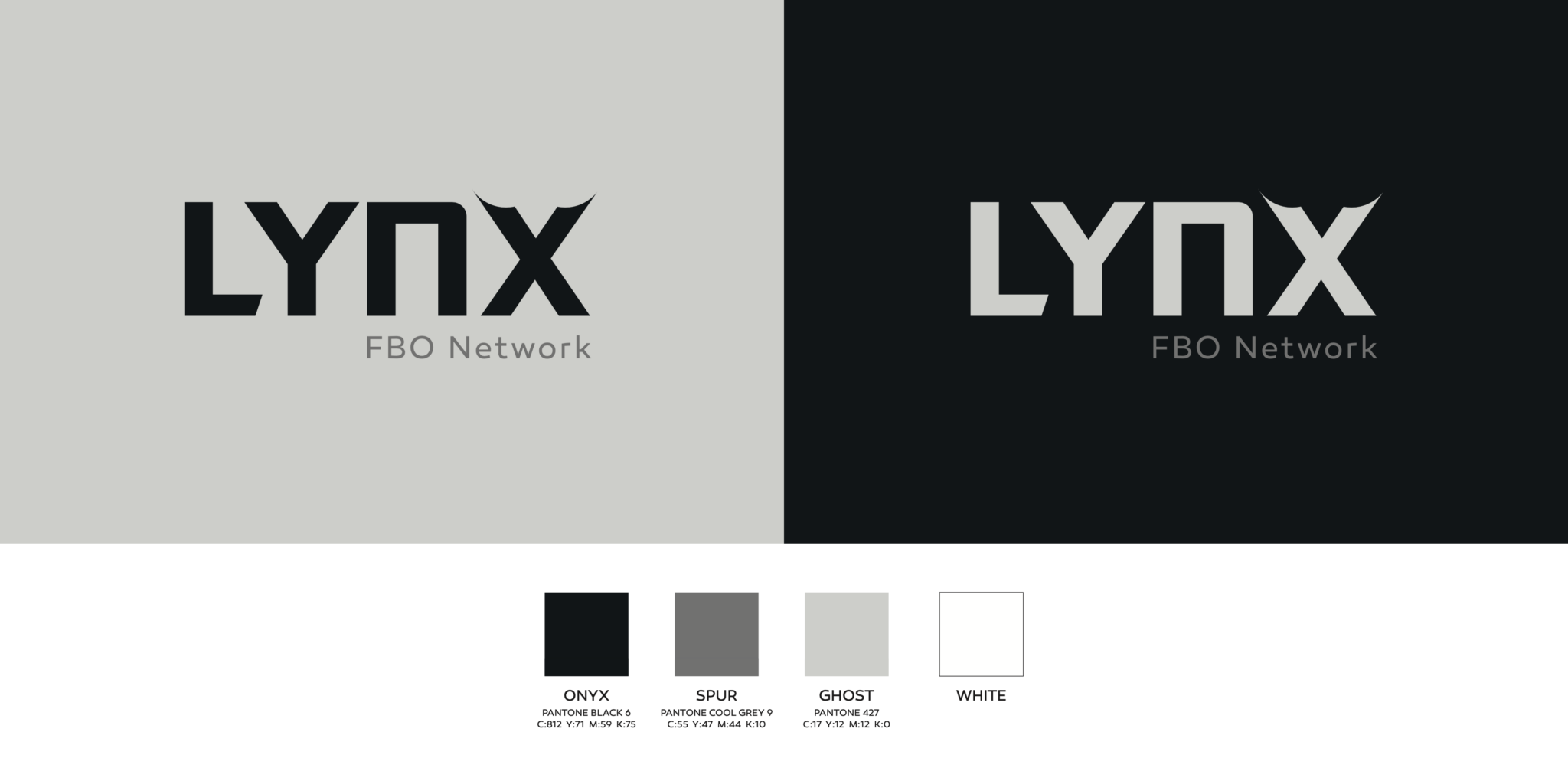
Acquisitions build networks faster than they build brands. WWC designed the brand and identity system for Lynx FBO Network, a portfolio company of The Sterling Group and a fixed-base operator (FBO) providing aeronautical services for aircraft, passengers, and crew. Lynx delivers fueling, ramp, and hangar services to general aviation customers at airports across the United States, from Napa to Pittsburgh to Morristown. As Sterling assembled the platform one acquisition at a time, each location arrived with its own name, look, and local legacy. WWC created a unified mark and visual language flexible enough to roll out across every location while staying consistent at network scale, giving a fast-growing aviation platform the one thing acquisition alone cannot buy, a single recognizable brand.
Growth by acquisition creates an identity problem. In 2016, The Sterling Group partnered with a management team holding more than 50 years of combined FBO experience to build Lynx FBO Network, acquiring fixed-base operators at general aviation airports from Napa to Morristown. Each acquired location arrived with its own established name and look, and nothing tied them together for the aircraft, passengers, and crew they served. Lynx needed a brand strong enough to replace local identities without losing local trust. Lynx asked WWC to design the identity system that would unify the network and scale with every future acquisition.
WWC designed the Lynx brand and identity system from the ground up. The identity had to perform everywhere the network operates, from ramps and hangars to passenger lobbies, in markets as different as Napa, Little Rock, and Pittsburgh, while reading as one company in every setting. So WWC built a system rather than a single logo, defining the mark, palette, and visual standards that let each location adopt the brand consistently and let future acquisitions fold in without a redesign. For a platform whose growth strategy is acquisition, consistency is the product, and WWC engineered the system to hold at any number of locations.
The brand did what it was built to do. It scaled. Under the Lynx identity, the network expanded into a national platform, with The Sterling Group completing 10 acquisitions across 9 locations in 4 years, entering markets including the New York metropolitan area, Providence, and Fort Lauderdale. Each acquired operator came aboard under one name and one visual system, and the identity held from Napa to Morristown. More importantly, the brand gave a company assembled from many parts something no acquisition could buy, a single face customers recognized at every airport.
Tell us where you want to grow. We will bring the strategy, creative, and technology to get you there.