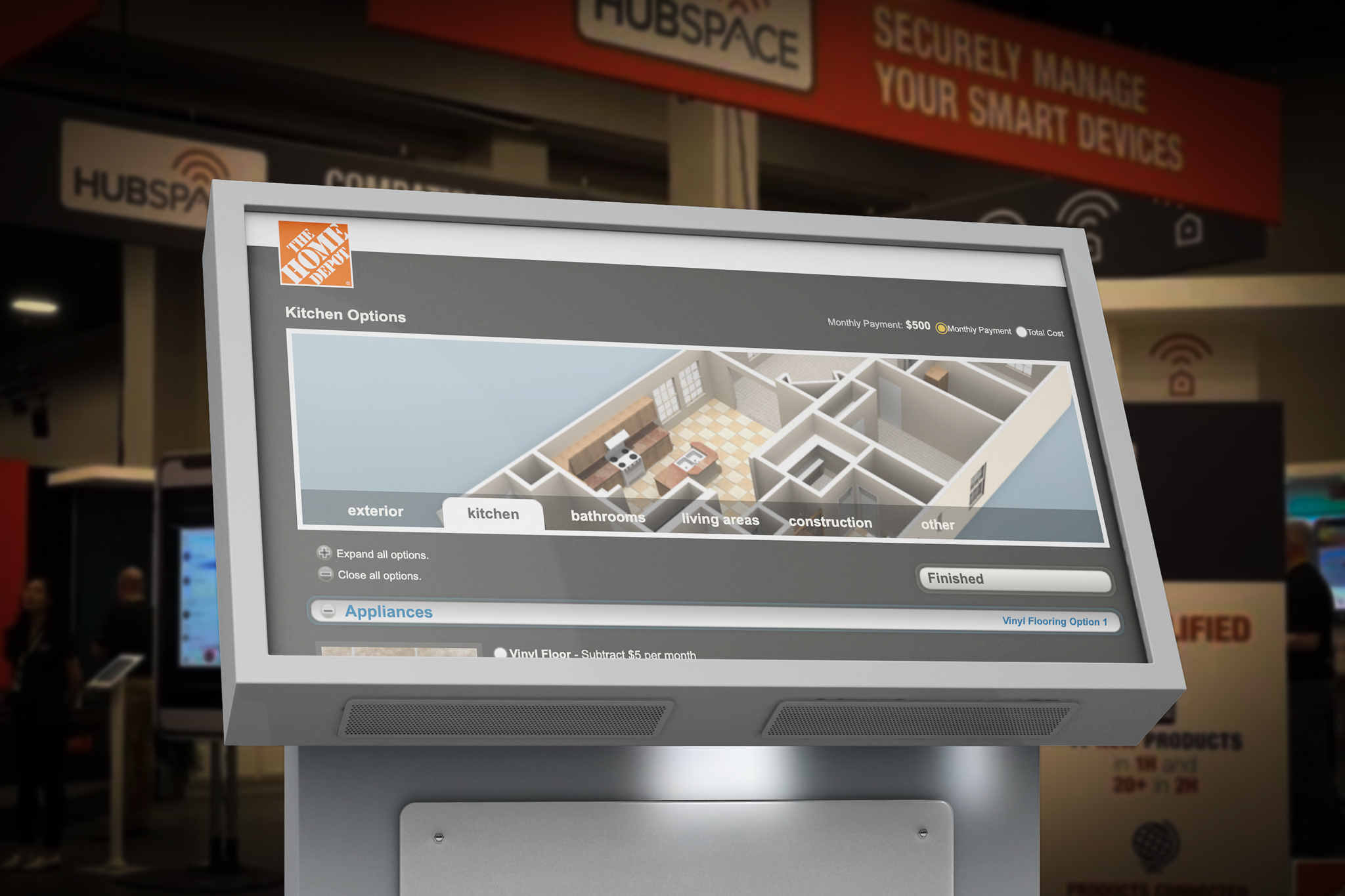
The biggest retail operations still come down to one shopper standing in one aisle, deciding. The Home Depot is the largest home improvement retailer in the United States, with 490,600 employees and more than $151 billion in revenue in 2021, operating more than 2,300 stores across North America. For a joint venture between The Home Depot and AHS, WWC developed an interactive in-store kiosk, an app development and user experience engagement built with Flutter and React. The kiosk let shoppers configure small modular homes on the sales floor, linking directly to each location's Home Depot inventory system so every selection and upgrade could be ordered at once. Deployed mainly in Louisiana and a few Texas locations, the work put a responsive digital layer inside the physical store, where home improvement decisions actually happen.
Scale is not the same as experience. The Home Depot operates more than 2,300 stores and offers more than 1 million products, yet a modular home is not an aisle purchase. Configuring one means choosing a model, selecting upgrades, and ordering everything that goes with it, without error. A joint venture between The Home Depot and AHS engaged WWC to design and develop an interactive in-store kiosk where shoppers could configure a small modular home end to end, tied directly to live inventory at each location. The assignment demanded digital interaction engineered for the realities of a working retail floor.
WWC designed and developed the kiosk experience end to end, from interaction design to production software. Shoppers configure a small modular home step by step, selecting models and upgrades on screen, while a direct link to each store's Home Depot inventory system assembles the full order so everything can be purchased at once. Flutter and React power the build, delivering fast, app-quality interfaces that hold up under continuous public use, a requirement for software that lives inside a store rather than on a personal device. User experience design shaped how shoppers encounter and move through the interface on first contact, with no onboarding to lean on.
The program succeeded on the sales floor. Deployed mainly in Louisiana with additional Texas locations, the kiosk found its strongest audiences in buyers configuring camps in Louisiana and homes for hunting leases in Texas, shoppers who needed a complete, orderable home rather than a cart of parts. The experience also played a role in a few post-hurricane situations, when fast access to a configurable modular home mattered most. More importantly, the kiosk turned a complex purchase into a guided one, letting a single shopper order an entire home as easily as a gallon of paint.

Tell us where you want to grow. We will bring the strategy, creative, and technology to get you there.